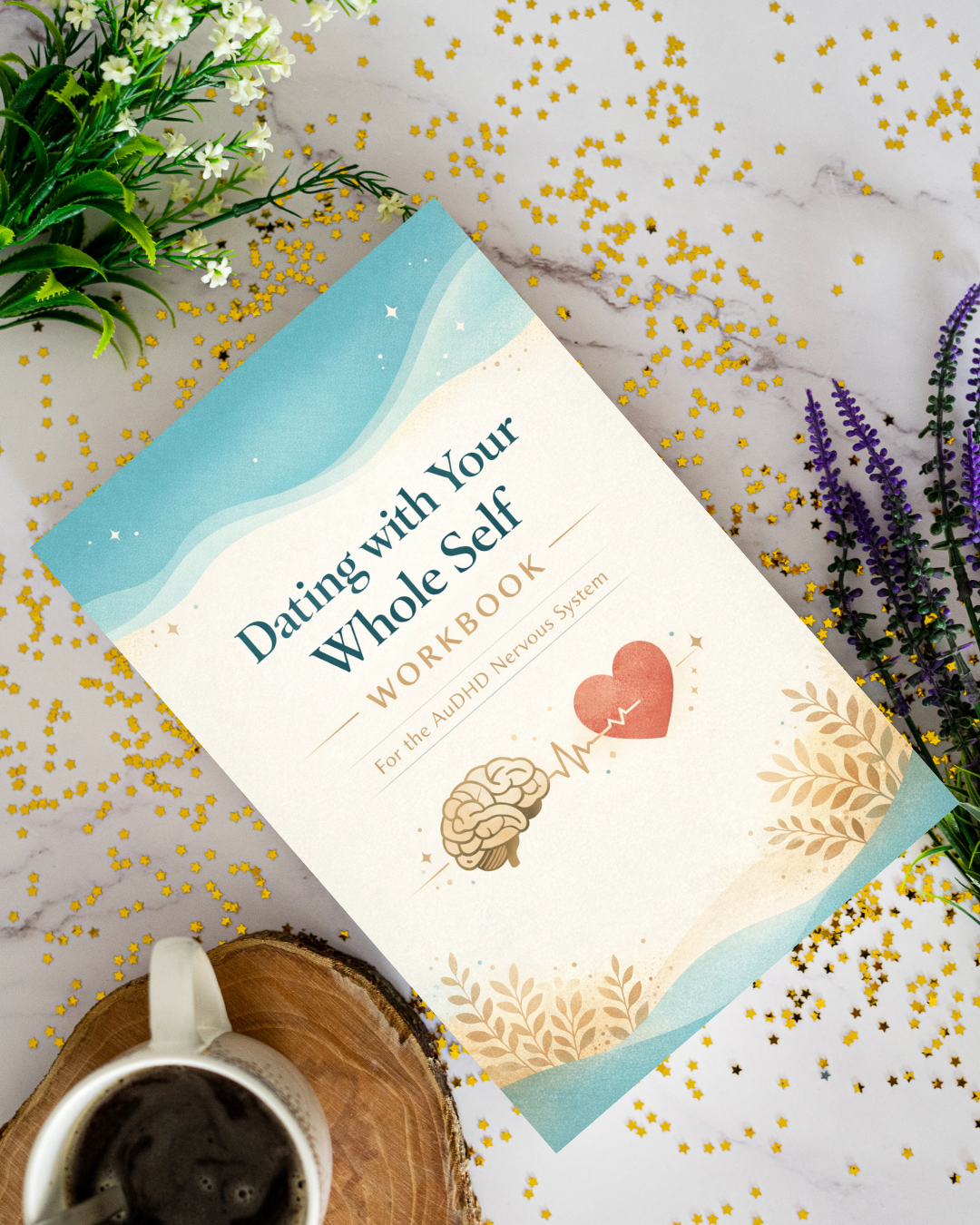
Dating with your whole self
A nervous-system-grounded dating guide for AuDHD women
$20.00
Dating shouldn’t feel like emotional survival.
If you’re an autistic or ADHD woman, dating may have left you feeling:
emotionally flooded after dates
confused by mixed signals
guilty for needing clarity
attached faster than you intended
exhausted from trying to “do dating right”
Not because you’re doing something wrong —
but because most dating advice ignores how your nervous system works.
You don’t need to push through discomfort.
You don’t need to mask better.
You don’t need to become less sensitive.
You need guidance designed for your brain and body.
Introducing
Dating with Your Whole Self
A practical, nervous-system-informed guide to help AuDHD women date with clarity, boundaries, and self-trust — without masking or burning out.
This guide is built around 11 grounding rules that help you slow down attachment, recognize emotional safety, and stay connected to yourself while dating.
Not by forcing confidence —
but by understanding what your body is responding to.
Why this guide exists
After my autism diagnosis at 30, I finally understood why dating felt so intense.
I wasn’t “too much.”
I wasn’t bad at relationships.
I was following rules that worked against my nervous system.
So I began identifying the boundaries, pacing, and clarity practices that actually supported me — emotionally and physically.
Those principles helped me stop masking, stop chasing confusion, and choose safer, steadier connections.
They’re also what helped me build the relationship I’m in today.
This guide is the system I wish I’d had earlier.
What’s inside
The 11 core rules help you:
slow emotional attachment before it takes over
recognize red flags before you bond
stop confusing intensity with connection
stay regulated while getting to know someone
choose clarity over anxiety
You’ll also find:
🚩 Red flags explained across 4 dating stages
🧠 Nervous-system regulation tools for dating stress
💬 50+ communication scripts for difficult moments
📝 Worksheets to define your personal boundaries
💔 Guidance for ghosting, endings, and detaching safely
👥 Scripts for family, social, and relational dynamics
✨ Green-flag markers for emotionally safe partners
🎭 A masking recognition guide to help you stop performing
This guide is for you if:
you’re late-diagnosed or self-diagnosed AuDHD
dating leaves you anxious, attached, or depleted
you keep excusing inconsistent or unavailable behavior
you struggle to trust your instincts
traditional dating advice feels confusing or harmful
Why this approach works
Nervous-system-aware
Every rule is grounded in regulation, pacing, and emotional safety.Practical, not performative
You get clear frameworks and scripts — not vague encouragement.Respectful of sensitivity
Your needs aren’t treated as flaws. They’re treated as information.Built from lived experience
This isn’t theory. It’s what I learned through real dating, diagnosis, and repair.
What readers say
“This helped me stop blaming myself for needing clarity. The scripts alone changed how I communicate.”
— Sarah M.
“Dating finally makes sense to me. I wish I’d had this years ago.”
— Jessica T.
“I understand my patterns now — and I can actually interrupt them.”
— Amanda K.
“This felt grounding, not overwhelming. Exactly what my brain needed.”
— Riley P.
After reading, you’ll be able to:
recognize emotional safety vs. anxiety
set boundaries without over-explaining
stop masking to be chosen
trust your body’s signals
date with steadiness instead of urgency
choose relationships that support your nervous system
30-day guarantee
If this guide doesn’t support you, email me for a full refund.
From me
I spent years trying to explain myself to people who didn’t want to hear me.
I stayed longer than I should have.
I blamed myself for feeling overwhelmed.
This guide is what helped me stop abandoning myself in dating.
If you’re ready to date with clarity instead of confusion —
this is your starting point.
— Grazielle Balbi
AuDHD Dating Coach
@audhd.dating.coach
Your nervous system deserves safety
Not performance.
Not confusion.
Not emotional whiplash.
Just clarity, steadiness, and choice.